Same Body, Two Different Numbers: Why Your Blood Pressure Reading Depends on Where You Are
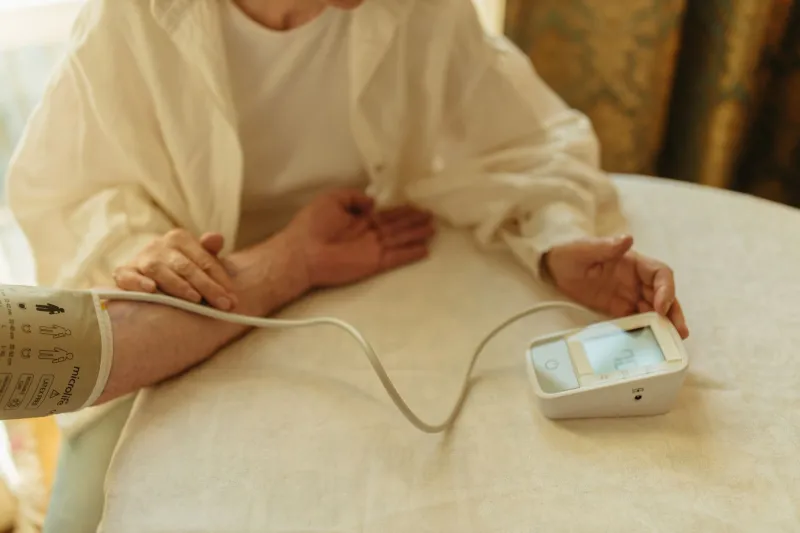
You sit in the exam room, arm resting on the table, and the cuff inflates. The nurse announces a number that surprises you — higher than anything you have seen at home. Your physician mentions hypertension. You leave with a prescription referral and a low-grade sense of unease, wondering whether that single reading actually reflects what is happening inside your arteries on an ordinary Tuesday.
This scenario is far more common than most patients realize. Blood pressure is not a fixed biological constant. It shifts throughout the day in response to physical activity, emotional state, temperature, posture, recent meals, and — critically — the social environment in which it is being measured. When those contextual factors are not accounted for, clinical decisions can be built on numbers that do not accurately represent a person's true cardiovascular status.
The Physiology Behind the Fluctuation
Blood pressure is regulated by a continuous interplay between the heart, blood vessels, kidneys, and the autonomic nervous system. The sympathetic branch of that nervous system — the part responsible for the fight-or-flight response — is exquisitely sensitive to perceived stress. Walking into a medical facility, undressing, waiting, and anticipating a clinical evaluation are all mild stressors that can activate sympathetic tone and cause transient arterial constriction.
The result is a measurable spike in both systolic pressure (the top number) and diastolic pressure (the bottom number) that may last for the duration of the appointment and resolve within minutes of leaving the building. This reaction is not a character flaw or a sign of unusual anxiety. It is a normal physiological response that affects a substantial portion of the population.
Research published in cardiovascular journals consistently estimates that between 15 and 30 percent of patients diagnosed with hypertension based solely on office readings do not have elevated pressure outside the clinical setting — a condition formally called white coat hypertension. Conversely, a different and arguably more dangerous pattern exists in which readings appear normal in the office but are elevated throughout daily life. This is known as masked hypertension, and studies suggest it may affect a similar proportion of adults, many of whom remain undiagnosed and untreated.
Why Masked Hypertension Carries Particular Risk
White coat hypertension tends to attract more attention because patients recognize the discrepancy and raise it with their doctors. Masked hypertension is more insidious precisely because there is no obvious red flag. Office readings look reassuring, so neither the patient nor the clinician pursues further investigation. Meanwhile, persistently elevated pressure at home or during work hours continues to stress arterial walls, strain the heart, and damage the kidneys — the same organ-level consequences that accompany untreated hypertension of any kind.
Data from long-term cardiovascular studies indicate that individuals with masked hypertension face cardiovascular event rates comparable to those with consistently elevated readings across all settings. That finding elevates home monitoring from a convenience feature to a clinically meaningful tool.
What the Evidence Says About Which Reading Matters
Major cardiology organizations in the United States, including the American Heart Association and the American College of Cardiology, have progressively moved toward endorsing out-of-office blood pressure measurement as a complement — and in some cases a prerequisite — to clinical diagnosis. Their current guidance acknowledges that a single office reading is rarely sufficient to confirm or rule out hypertension.
Ambulatory blood pressure monitoring, in which a cuff automatically records readings every 20 to 30 minutes over a 24-hour period, remains the gold standard for capturing a patient's true pressure profile. This approach accounts for the normal dip that occurs during sleep, identifies early-morning surges associated with cardiovascular risk, and eliminates the distortions introduced by the clinical environment. However, ambulatory monitoring requires specialized equipment, is not universally covered by insurance without prior authorization, and can be cumbersome for patients to wear through a full workday.
Home monitoring, when performed correctly with a validated device, offers a practical and increasingly well-supported alternative. Multiple readings taken over several days or weeks provide an average that is more representative of habitual pressure than any single clinical measurement.
Choosing a Home Monitor That Actually Works
Not all home blood pressure monitors deliver accurate results, and the consumer market is crowded with devices that have never undergone rigorous independent validation. The most important criterion when selecting a monitor is whether it appears on a validated device list maintained by an independent organization. In the United States, the most authoritative resource is the American Medical Association's validated device listing, which draws on testing protocols developed by the Association for the Advancement of Medical Instrumentation.
A few practical considerations beyond validation status:
Cuff placement matters more than most people realize. Upper-arm monitors consistently outperform wrist monitors in accuracy, particularly for individuals with obesity, arterial stiffness, or irregular heart rhythms. Wrist monitors are sensitive to positioning errors that are difficult to eliminate in everyday use.
Cuff size must match arm circumference. Using a standard adult cuff on a larger arm compresses tissue unevenly and produces falsely elevated readings. Most monitors come with a standard cuff and offer a larger option — measuring your mid-upper arm circumference before purchasing is worthwhile.
Measurement conditions should be standardized. Clinical guidelines recommend sitting quietly for five minutes before measuring, avoiding caffeine and exercise for at least 30 minutes prior, keeping the arm at heart level, and taking two to three readings at least one minute apart. Averaging those readings provides a more stable estimate than any single measurement.
How to Make Home Data Useful in a Clinical Conversation
A log of home readings is only as useful as the context surrounding it. Recording the time of each measurement, any relevant circumstances (poor sleep, stressful day, recent physical activity), and the medications taken that morning gives your physician the information needed to interpret the numbers meaningfully.
Many electronic monitors now store readings automatically and can export data through companion applications. If your device supports this feature, bringing a printed summary or sharing a digital log at your appointment eliminates the recall bias that comes with self-reported numbers.
If your home readings consistently differ from office readings by more than 10 to 15 millimeters of mercury, that discrepancy itself is worth raising directly. Your physician may order 24-hour ambulatory monitoring to resolve the question definitively, or may adjust the threshold at which treatment is considered based on the totality of your readings.
The Broader Point About Context in Medicine
Blood pressure measurement is a useful case study in why a single data point, stripped of context, can mislead rather than inform. The number on the cuff reflects not just the state of your cardiovascular system but the environment in which it was captured, the equipment used to capture it, and the technique of the person operating that equipment.
Approaching your own health data with that awareness — neither dismissing concerning readings nor accepting them uncritically — puts you in a stronger position to participate in decisions about your care. Asking your physician whether your office reading alone is sufficient to guide treatment, and whether home monitoring would add useful information, is a reasonable and evidence-supported question to raise at your next appointment.